
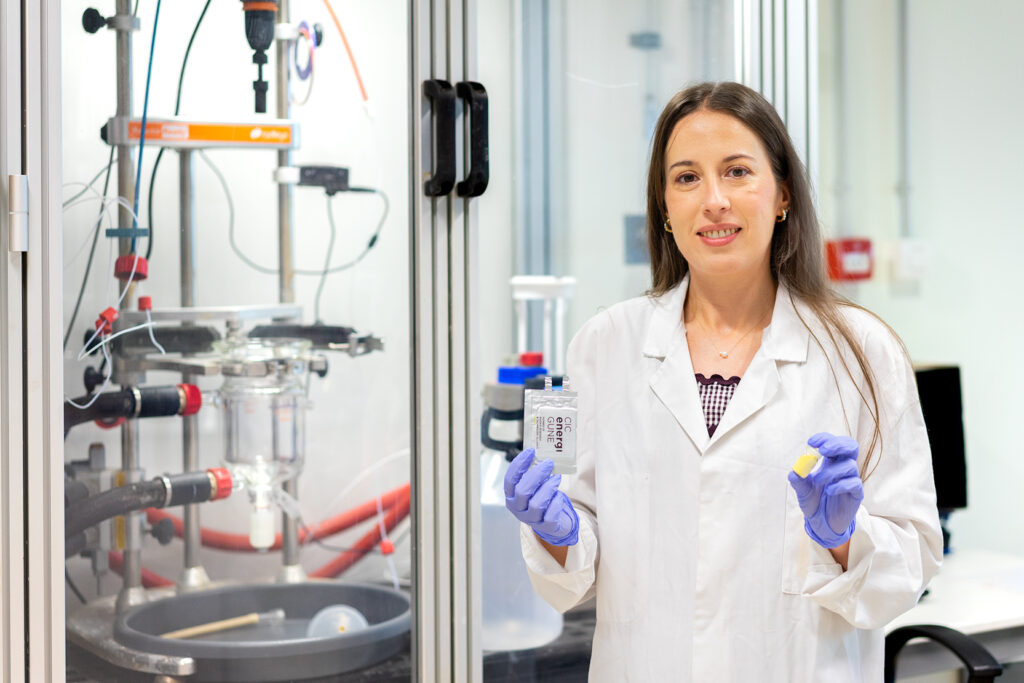
CIC energiGUNE, the Basque reference centre for electrochemical and thermal energy storage and conversion, continues to strengthen its capabilities to accelerate the industrialisation of new materials for the next generations of batteries, helping companies and developers overcome one of the most critical phases of the innovation process: scale-up.
Although the discovery of new materials is a major focus of research in energy storage, one of the greatest challenges lies in ensuring that these materials can be manufactured reproducibly without losing the performance achieved in the laboratory. Validating this process is decisive for reducing technological risk and facilitating transfer to real industrial applications.
“The real challenge is not developing a new material, but ensuring that it can be manufactured reproducibly without losing its performance,” explains Marta Cabello, Research Team Leader of Material Transfer & Upscaling at CIC energiGUNE. “It is not only about producing a larger quantity of material, but about ensuring that every batch maintains the same quality and the same performance.”
Next-generation materials such as lithium-rich materials, silicon anodes and new sodium-based chemistries offer enormous potential to improve the energy density, safety and sustainability of batteries. However, their success will also depend on the ability to manufacture these materials robustly, reproducibly and competitively at industrial scale.
To respond to this challenge, CIC energiGUNE offers industry capabilities that cover the entire material transfer process: synthesis process optimisation, scale-up, advanced characterisation, electrode processing, integration into cells and validation under representative conditions. This approach makes it possible to identify potential limitations from the earliest stages of development and reduce uncertainty before undertaking larger-scale industrial investments.
“Industry needs to demonstrate that a material can be manufactured consistently, maintaining the same performance in every production run,” says Marta Cabello. “Our goal is to help companies make decisions based on solid technical evidence, reducing development times and minimising risk before moving towards industrialisation.”
In addition to scale-up itself, the centre validates the behaviour of materials during processing and their integration into a full cell, a key aspect in confirming that the performance obtained in the laboratory is maintained under conditions close to a real application. This comprehensive approach helps shorten the distance between scientific discovery and the manufacture of the batteries that will drive the energy transition.
Source: https://cicenergigune.com/en/news/accelerates-industralisation-battery-materials