Practical Response to Risks for Fire, Health and Safety Managers
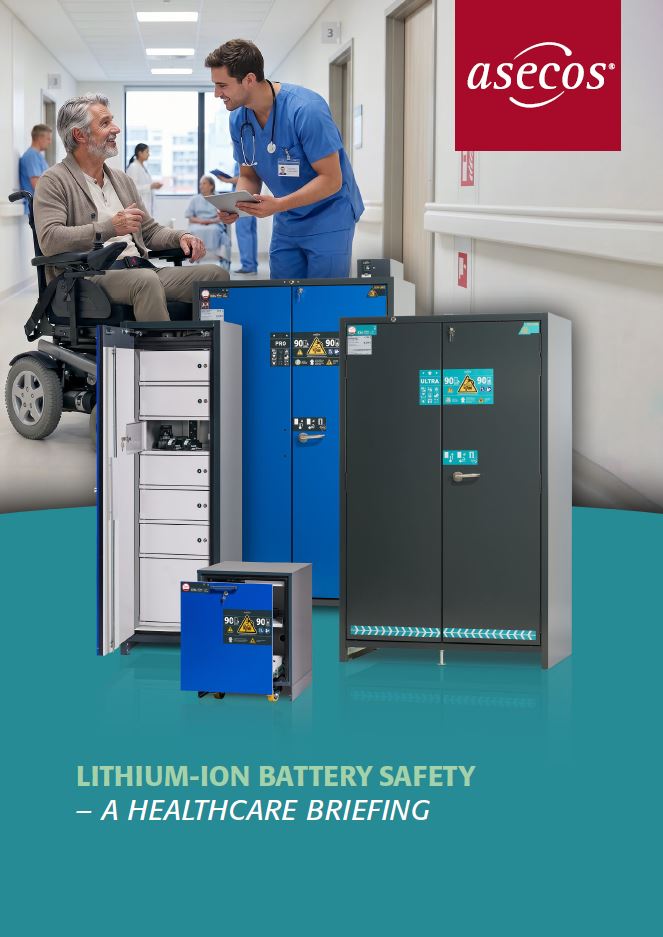
A new guide has been published to help healthcare organisations manage lithium battery risks and protect patient safety.
Addressing the wide range of lithium battery usage in healthcare – such as medical equipment, mobility aids and cleaning robots – it explains their unique fire risks and provides practical advice on managing them safely. The need for guidance is increasing as UK fire brigades are now tackling at least three lithium-ion battery fires a day, according to research from business insurer QBE.
The guide, published by storage experts asecos Ltd, offers a practical checklist based on risk, containment and operating procedures, in order to protect people.
Les Day, Commercial Director at asecos, said “Many healthcare organisations are developing procedures for safely charging, storing and managing lithium batteries.”
“Fires from the batteries create their own oxygen, quickly release toxic gases and potentially cause explosions. This can present complex challenges to staff at hospitals, care homes and healthcare facilities, who must maintain patient safety and continuity of care.”
“The greatest lithium-ion battery risk tends to come from small devices put on charge and then left unattended. Even small battery incidents can cause operational problems. Our new guide offers very practical advice to avoid unnecessary disruption.”
Download the Lithium Battery Guide for Healthcare
For further information, please visit: www.asecos.co.uk